Tuesday, September 28, 2010

One Little Victory


And even Stephen Abraham agrees with me.

"Truth is so hard to tell, it sometimes needs fiction to make it plausible."
—Francis Bacon

• And another: "The perfect excuse for war"
• Filth? Ha!: "Shame on all the skeptics"
• Rebuttal: "Shame on all the skeptics"

Sunday, September 5, 2010

On The Night


One of the best things about music is the discovery process, because by and large, music is a constant pursuit. This explains why we tend to like music more that we find ourselves.

Last month I discovered On The Night, a gem of a live album by classic rock outfit Dire Straits. This was a treasured find for two reasons. One, because Dire Straits' already great songs sound greater live, where the band has room to explore their unique sonic textures. And two, because I can't help but feel that this album was overlooked when it was released in 1993, lost in the shuffle of grunge's heyday and the twilight of a career.

Fronted by Mark Knopfler, one of the most masterful finger-picking guitarists of our time, Dire Straits made music that was always a little left of center. The British quartet emerged in the post-punk era of the late 1970s to play what was decidedly not post-punk. Actually, their body of work makes for an interesting study, given the melding of roots rock, blues-jazz stylings, MTV-made singles and slow-burning ruminations. And even as their sound grew to incorporate some of the cheesier earmarks of the '80s, Dire Straits maintained a pop sensibility while never losing their mature edge.
"The band's music was offset by Knopfler's lyrics, which approximated the winding, stream-of-conscious narratives of Bob Dylan." —Allmusic
On The Night works so well because it does what any live album should do, which is capture a band at its peak with the intangible energy that can't be felt from a studio recording. As evidence: the exuberant buildup of the already happy-go-lucky "Walk Of Life"; the realization of arena-rock power on "Heavy Fuel"; the dark intrigue and palpable eeriness of "Private Investigations"; and the simple romantic beauty of the three-note licks on "Romeo And Juliet." Although some of these musical moments are represented in their studio counterparts, they really feel different and come alive here on this album, which was culled from two European performances in May 1992.

Another success of On The Night is the transcendence of the songs themselves, over half of which are augmented with more progressive arrangements. With the free reign of the live setting, songs like opener "Calling Elvis" and closer "Brothers In Arms" expand gracefully without overstaying their welcome. Moreover, most of the 10 tracks here are jazzed up and countrified with liberal use of saxophone and pedal steel guitar, which provides a warm richness that plays to their advantage.

On The Night provides a snapshot of an underappreciated band in their prime, not long before they hung up the guitars for good. While it includes most of the hits, the setlist plays naturally, without the obligation to include all the hits — "Sultans Of Swing" and "So Far Away" are notably absent, but not terribly missed when looking at the whole.

Even though Dire Straits is long gone from the modern zeitgeist, on this night, we can all look back and savor the moment with a fond sense of retroactive nostalgia.

Sunday, August 8, 2010

Less for More


A few months ago, I dined at Spunto in Soho for lunch, and I think it's time I said something about it. Because after all these years, my long-feared suspicions have been confirmed: The thin-crust pizza market is a racket.

Does it taste good? Sure. Is it worth the price you pay? Not unless it's Marion's.

Just look at the menu: $13 for a large pie without any toppings. Since plain-cheese pizza sort of defeats the purpose of eating pizza in the first place, an additional layer of toppings will cost you five more bucks. I'd be tempted to try one of Spunto's house specialty pizzas if it didn't put me out $24.

I realize that some people are okay with paying whatever for thin-crust pizza because they prefer that to thicker crusts. Honestly, I wouldn't be opposed to the prices if I didn't get hungry an hour or two later.

So if anyone else's experience is anything like mine, thin-crust pizza ultimately serves as a snack, but you end up paying a full meal's price for it. This isn't right, especially at chains that charge the same for thicker crusts.

Preference is one thing; principle is another.

Monday, August 2, 2010

One Ring To Bind Her


How to propose to your girlfriend in 13 steps:
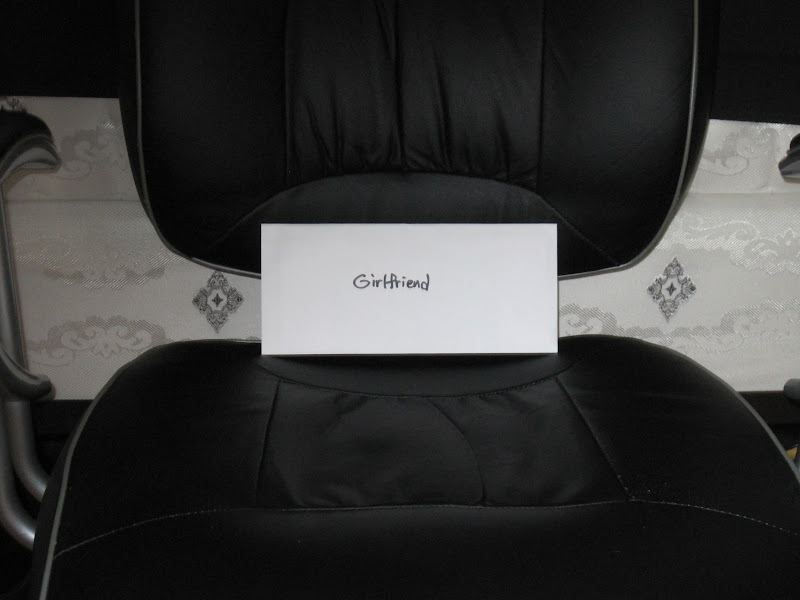
  1. Create a relationship crossword puzzle. Include inside jokes, pet names, common likes, and references to relationship history.

  2. Leave crossword puzzle for girlfriend to find when she comes home.


  3. Wait for girlfriend to meet you at the secret location revealed by unscrambling certain letters on the crossword. One location could be Belvedere Castle in Central Park.
  4. Give girlfriend a big hug and kiss when she does finally find you off to the side of the castle, away from all the tourists.


  5. Present her a single rose. Then say, "Well, I guess we can head back home now." Make sure she knows you're not serious.
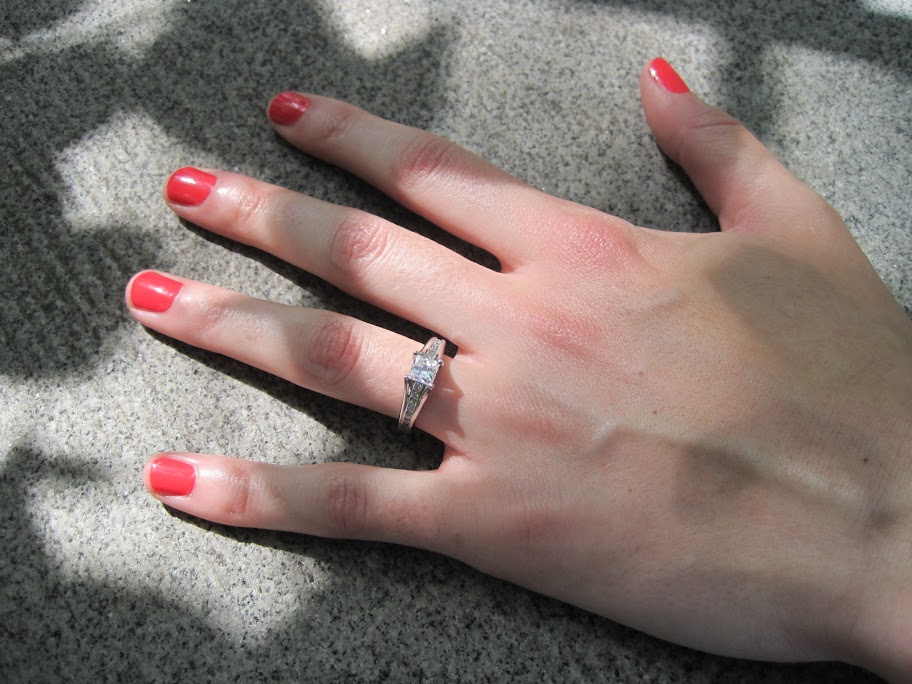
  6. Pull out the ring and say "Do I even have to ask?" with a knowing smile. But follow up with "Will you marry me?" just to be sure.
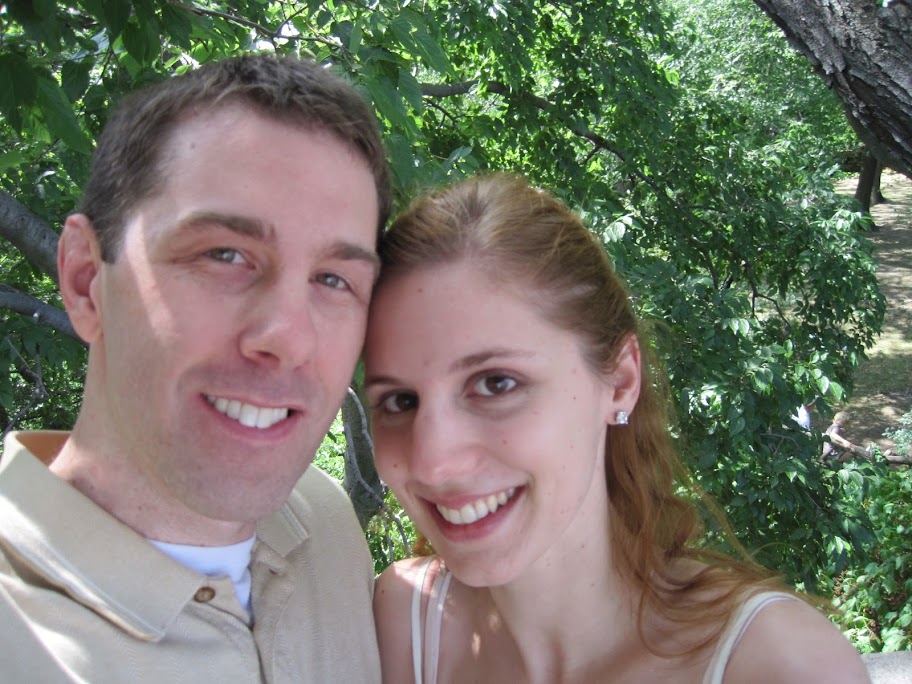
  7. Take pictures.


  8. Appreciate the complete randomness and coincidental timing of a former hockey teammate running into you moments after popping the big one...
    "I was strolling through central park on Saturday afternoon with a lovely coed. As we ascended to the platform of the castle that resides off the southwest edge of the Great Lawn, I glanced to my left and saw a very familiar towering god-like figure. So familiar, after a quick double take I zoned in and got closer, it was no other than the one the only Kenny "Marquee" Devine. Not only was the sighting out of left field, couple it with the fact that literally moments earlier in that exact spot with his princess in hand, he asked the lady of his life that eternal question.....and she graciously accepted. Hearts across America broke this weekend. Kenny, congrats big guy...From every last member of the Tea Time community, we wish you nothing but the best....salud"
  9. Take more pictures.


  10. Accept the fact that, yes, Billy Squier's "Love Is The Hero" is indeed playing in your head. But it's cool.
  11. Dine at a great steakhouse.


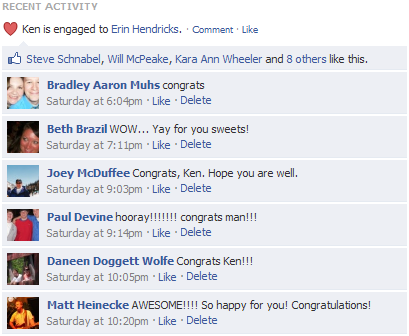
  12. Tell the world.


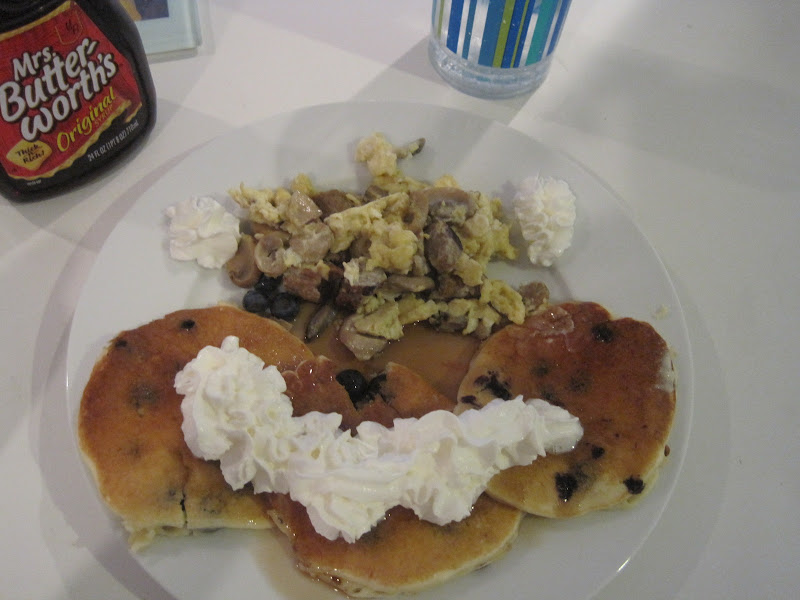
  13. Feast on a celebratory breakfast the next morning, with whipped cream symbolizing your sentiment.

Wednesday, July 21, 2010

Rest in Peace


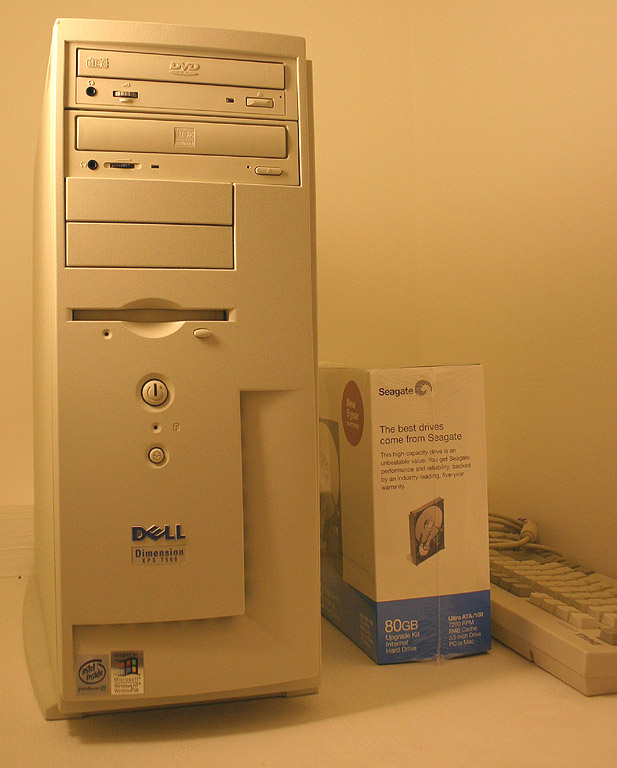
NEW YORK—Shortly after 9:30 p.m EDT on Monday, July 19th, Dell computer White Lightning was officially pronounced dead from owner decommissioning. Lightning, a Dell Dimension XPS T550 purchased for around $3,200 in July 1999, was just days away from what would have been its eleventh birthday.

During White Lightning's 10-year tenure, Bill Clinton was impeached, MySpace blew up, the Red Sox won the World Series, and owner Ken Devine got a girlfriend.

Devine maintains that Lightning had a great run, but he's alone in that sentiment. Every other person who has come into contact with the mainstay machine insists that it was a painstakingly slow death over the course of a decade where computer technology advanced by several leaps and bounds. In fact, family members attest that Devine's stubborn refusal to even consider replacing the sluggish dinosaur bordered on cruelty—more so, perhaps, to himself.

Yet critics agree that the 550 MHz has-been had a short stint of glory in its first year of existence, when 16-megabyte video cards ruled the personal-computing frontier, and 20 gigs of hard-drive space was much more than anyone would ever need.

Yes—people really lived like this.

No one's sure how, but White Lightning managed to run on the Windows 98 Second Edition operating system all the way until late 2006, when a freak system-file deletion wouldn't allow Devine to re-enter Windows. A tech-savvy co-worker came to the rescue and bypassed Lightning's hard drive by adding a second one running Windows XP—an operating system already half a decade old.

Devine enjoyed the much-more-stable XP, but had his first realization that Lighting was behind the times when he received an iPod for Christmas in 2007. The portable music device was a fraction of the size of his computer, but at 80 gigs, had the storage capacity of four times more than his once-super computer.

After months of contemplation, Devine reluctantly decided on Monday that it was time to replace White Lightning with Black Thunder, a far-superior Dell machine configured by a pair of former co-workers who felt sympathy for Devine's situation. The duo was compelled to end the years of neglect after learning of Devine's surprising contentment with his long-running personal-computing history. Oddly enough, the speedy PC now adored by Devine sat in his closet for the past 15 months, just waiting for its chance.

"I just felt like it was time," said Devine on retiring his old friend. "Whitey was taking longer naps, and he just sort of gave up when I tried to watch videos on YouTube. I only saw a new frame like once every 15 seconds."

Devine revealed that the key to preserving such an antiquated computing device was a steady diet of program management and maintenance, particularly with nightly shutdowns.

But more than anything, an unprecedented level of patience.

"The good news is now I don't have to put my clothes away or make a sandwich while my computer is booting up," he said. "But I think this whole experience built a lot of character, both for me and White."

"I wouldn't change a thing," he added.

Lightning is survived by PC siblings Blue Bronco and Black Stealth, the latter of which has been in a coma for the past several months. Brother Red Bull passed away quietly in 2007.